
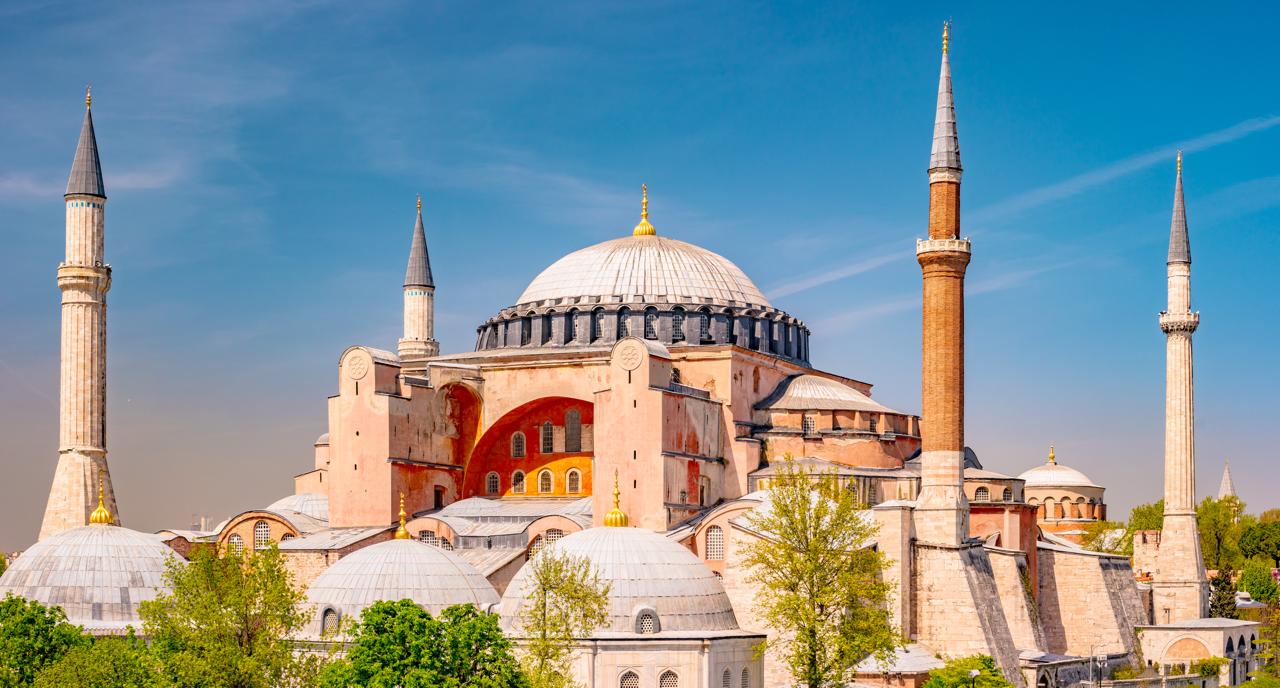

Hagia Sophia Where History, Faith, and Culture Converge
From Basilica to Mosque, and Back Again
Originally built in 537 AD by the Byzantine Emperor Justinian I, Hagia Sophia was the greatest cathedral of its time. For nearly a thousand years, it stood as the heart of Eastern Christianity. Its massive dome, glittering mosaics, and architectural innovations inspired countless churches, including many later cathedrals in Europe.
After the Ottoman conquest of Constantinople in 1453, Sultan Mehmed II converted Hagia Sophia into a mosque. For Muslims, Jesus (known as Prophet Isa in Islam) is also a revered Prophet, and Hagia Sophia continued to serve as a sacred space. The Ottomans preserved its name—Ayasofya, meaning “Holy Wisdom”—and added Islamic features like minarets, calligraphy panels, and a mihrab pointing toward Mecca.
In 1935, Hagia Sophia became a museum under the Turkish Republic, welcoming millions of visitors of all faiths. In 2020, it was reconverted into a mosque, yet it remains open to tourists as one of Istanbul’s most important cultural treasures.
⸻
A Masterpiece of Architecture
For Americans visiting Hagia Sophia, the sheer scale is breathtaking. The main dome soars over 180 feet (55 meters) above the ground, appearing to float as sunlight filters through its 40 windows. Byzantine mosaics depicting Christ, Mary, and saints coexist with Ottoman calligraphy panels bearing the names of Allah, Muhammad, and the first four Caliphs.
This harmony of Christian and Islamic art under one roof is what makes Hagia Sophia truly unique: a visual reminder of Istanbul’s place at the crossroads of civilizations.
⸻
Why Americans Should Visit Hagia Sophia
1. A Bridge Between East and West – Hagia Sophia embodies the meeting of cultures that shaped world history.
2. Living Faith – Whether you are Christian, Muslim, or simply curious, the building reflects deep spiritual traditions that continue today.
3. A Photographer’s Dream – From its domes and mosaics to its Ottoman chandeliers, every corner is a picture worth capturing.
4. Easy Access – Located in the historic Sultanahmet district, Hagia Sophia sits right next to the Blue Mosque, Topkapi Palace, and the Basilica Cistern—making it a perfect stop on your Istanbul itinerary.
⸻
Visiting Tips for U.S. Travelers
• Opening Hours: Hagia Sophia is open daily, but prayer times are reserved for worshippers. Tourists can visit outside prayer hours.
• Dress Code: As an active mosque, modest dress is required. Women should cover their heads (scarves are often provided at the entrance).
• Tickets: Entry is free, though guided tours are highly recommended to fully appreciate the history.
• Best Time to Visit: Early morning or late afternoon to avoid heavy crowds.
⸻
Final Thoughts
Hagia Sophia is more than a building—it is a symbol of resilience, coexistence, and faith. For American visitors, it offers not only a glimpse into Byzantine and Ottoman history but also a living dialogue between civilizations.
When you walk under its colossal dome, you are standing in the very heart of Istanbul, where the world’s cultures, beliefs, and histories meet.
👉 To experience Hagia Sophia with expert guidance, check out our tailored tours at hagiasophiatour.com
